Astronaut Crash Overview
Game Basics and Developer
Astronaut is a crash-style casino game created by 100HP Gaming, a studio that focuses on instant and multiplier titles.
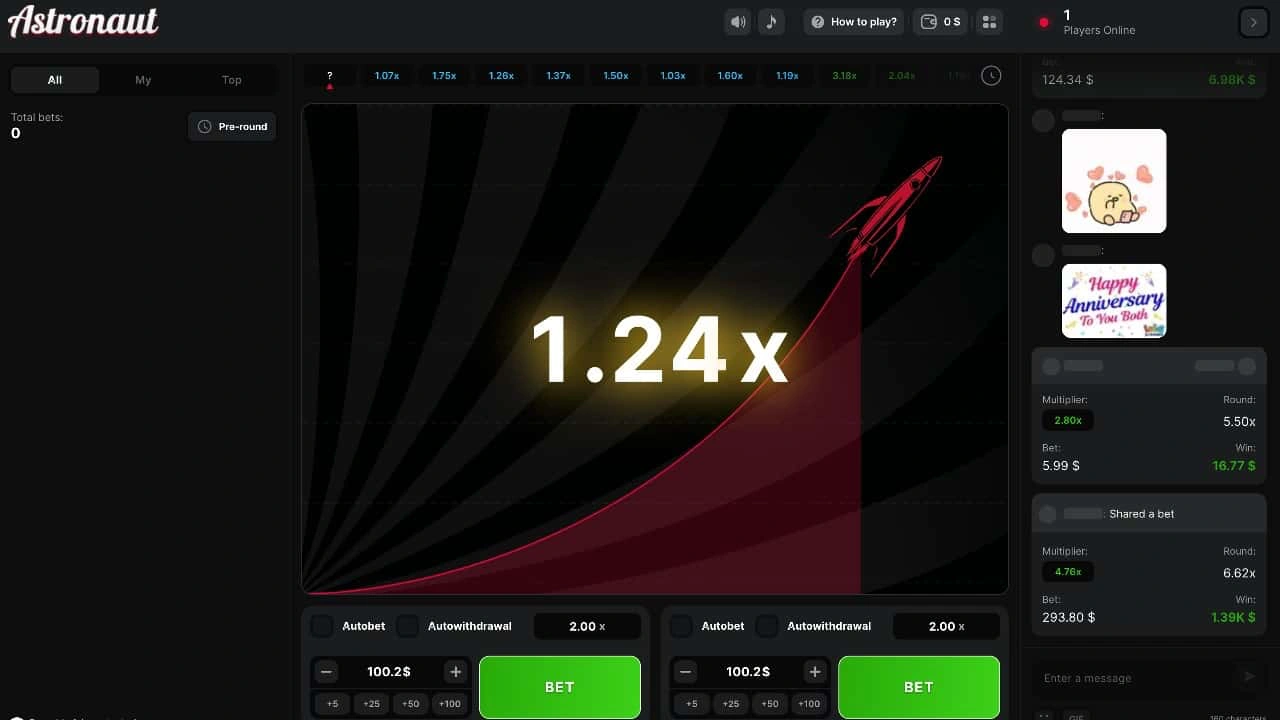
Instead of reels, you watch an astronaut fly upward while a multiplier climbs from 1.00x upwards. Your goal is simple on paper:
- Place a stake.
- Watch the multiplier rise.
- Cash out before the crash.
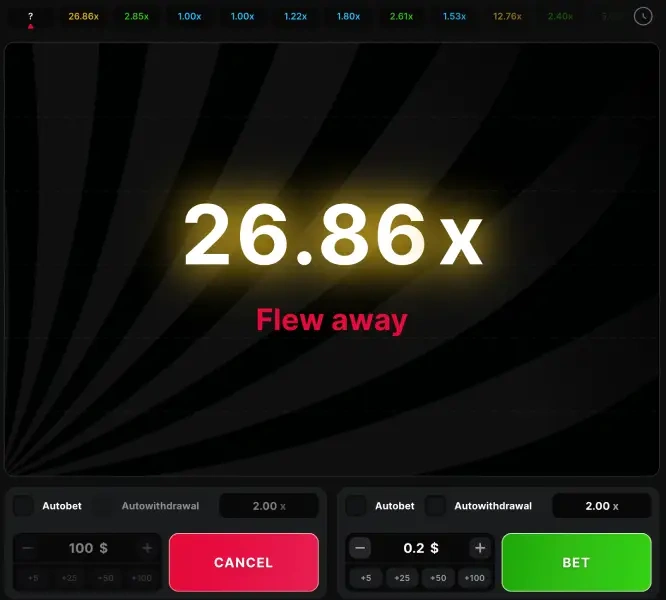
A crash happens when a red crystal appears and ends the round instantly. If you have not cashed out that bet, the full stake on that bet is lost.
Astronaut is integrated into many online casino lobbies and is usually available in both demo and real-money modes.

How Multipliers, Cash-Outs and Crashes Work
Each round follows the same pattern:
- A short betting window opens.
- The astronaut launches; the multiplier starts at 1.00x.
- Green crystals keep the multiplier growing.
- A red crystal ends the round.
You control only one thing: when to exit. Cash out in time and you get stake × current multiplier. Wait too long and a red crystal wipes that bet.
The process is fully random within the maths model. Past rounds do not influence the next crash point, even if you see several low or high multipliers in a row.
Key Features: Shield, Dual Bet, High Multiplier
Astronaut adds several mechanics that most crash games do not have:
- Golden Shield – a special symbol that can block the next red crystal and let the round continue.
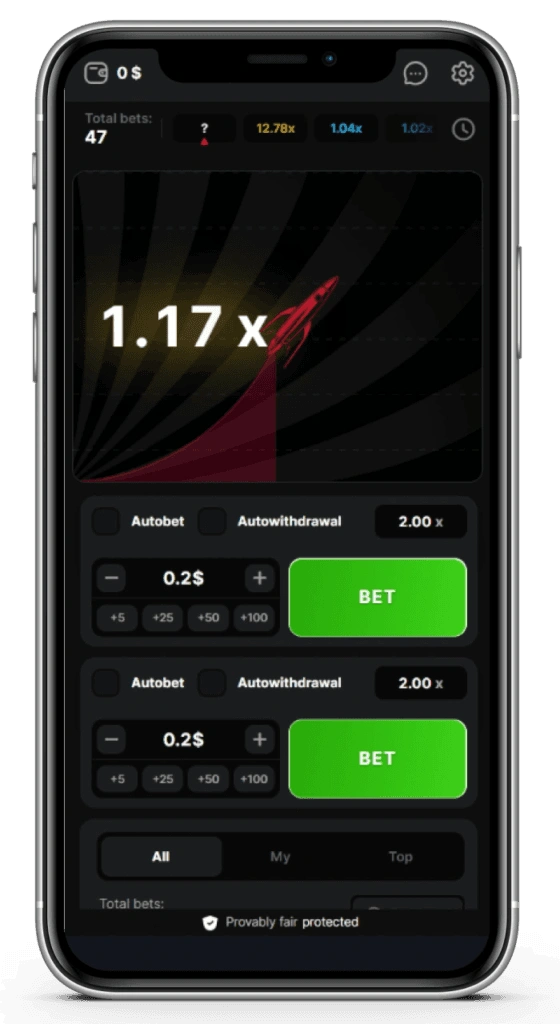
- Dual bet – two independent bets in the same round, each with its own cash-out rules.
- High multipliers – public sources mention potential peaks from x10,000 up to x48,000+, depending on operator caps.
These tools shape how you handle risk. They do not remove the house edge, but they give more ways to control exposure per round.
Mechanics and Gameplay
Betting Rounds and Timing
Rounds are quick. You usually get only a few seconds to:
- Set stake size (or stakes, with dual bet).
- Choose manual or auto cash-out.
- Confirm before betting closes.
When the countdown ends, bets lock in and you must wait for the next round if you miss it. Fast tempo is part of the pressure in crash games, so plan stake sizes and targets before you start a session.
Multiplier Growth and Crash Risk
The multiplier climbs in real time. Each green crystal adds another step. There is no fixed pattern; some rounds stop very early, others reach four digits or more.
Key points:
- The higher the multiplier, the more painful a late cash-out feels.
- A long streak of high rounds does not make the next one “due” to crash; probability resets each time.
- High volatility means long flat stretches with small returns or full losses can happen.
Cash-Out Types: Manual, Auto, Partial
Astronaut supports three cash-out methods:
- Manual cash-out
- You click at a chosen multiplier.
- Maximum control, but you must react fast.
- Auto cash-out
- You pre-set a target (for example x2.50).
- The game closes the bet automatically at that level.
- Partial cash-out (“Take Half”)
- Locks in half of current winnings and leaves the other half in the round.
Partial cash-out is central to many balanced strategies because it splits one bet into a secured part and a higher-risk part.

Red Crystal Crash Trigger
The red crystal is the hard stop. When it appears:
- The round ends instantly.
- Any bet still active is lost.
- If a Golden Shield is active, it can block one red crystal, then deactivate.
Do not rely on the shield as a regular safety net. It is uncommon and should be treated as an occasional bonus, not part of every round.
Stats: RTP, Volatility & Payouts
RTP Values and What They Mean
Sources give different RTP values for Astronaut:
- Around 96% on some review and strategy sites.
- Around 98% on others.
The gap likely reflects different configurations or older data. Always check the in-game info at your casino; that value actually applies to your version.
RTP (Return to Player):
- Describes long-term statistical payback, not a promise.
- A 96–98% RTP still leaves a house edge of 2–4%.
- Short sessions can be far above or below the stated rate.
Volatility and Player Impact
Astronaut is listed as very high volatility.
That means:
- Payouts can cluster; dry spells are normal.
- Big multipliers appear less often but can be large.
- Bankroll swings are stronger than in many regular slots.
High volatility suits players who accept heavy variance and use small stakes. It is a poor match for anyone seeking stable, predictable results.
Max Payouts and Multiplier Limits
Technical pages mention:
- Max multipliers from x10,000 up to around x12,960 and even x48,000+, depending on the operator.
- Max win caps controlled by the hosting casino (for example, $120,000 on one site).
In practice, three limits matter:
- Game math (theoretical highest multiplier).
- Casino cap per round or per bet.
- Your own stake size and bankroll.
Always read the casino’s maximum win rules. They can override the theoretical high multiplier.
Provably Fair System Explained
Several Astronaut sources highlight provably fair technology.
Typical structure:
- Each round outcome comes from a cryptographic seed on the server plus a client seed.
- A hash of the server seed is shown first; the raw seed is revealed later.
- You can verify that the seed used matches the hash and that results were not altered retroactively.
Look for a “Fairness” or “Provably Fair” link in-game. If you do not see any explanation at all, treat that as a warning sign and double-check the operator’s licence.
Advanced Player Strategies
High-Risk vs Balanced Cash-Outs
Two broad approaches dominate crash games:
- High-risk style
- Targets like x10, x20 or more.
- Many full losses, sometimes very large hits.
- Balanced style
- Targets around x1.5–x4.
- Smaller swings, more frequent partial returns.
A profit-focused approach usually leans closer to balanced cash-outs with modest stakes, then accepts that the house edge remains. High-risk targets should be used only with tiny stakes relative to total bankroll.
Using Take Half to Reduce Risk
“Take Half” is a flexible risk control tool:
Sample pattern:
- Set a mental target, say x4.
- When the round hits x4, press Take Half.
- Decide one of two paths:
- Cash out the rest soon (x5–x6).
- Let the remainder run toward x10+ with full acceptance of loss.
This way, each good round secures at least some value, while still leaving room for stretched targets. Overuse of Take Half at tiny multipliers (like x1.2) can slowly drain funds, though, because the house edge still applies.
Dual Bet Strategy
The dual bet feature lets you apply two ideas at once:
- Bet A: low multiplier auto cash-out (x1.5–x2.5).
- Bet B: higher target (x5–x12 or more).
Benefits:
- Bet A aims to collect frequent small returns.
- Bet B looks for rare spikes.
- You can use Take Half only on the riskier bet if you like.
Keep the combined stake sensible. Two bets should not double your risk beyond what your budget can handle.
Betting Systems for Crash Games
Common betting systems (Martingale, Labouchere, etc.) are risky in crash games:
- Doubling after losses can hit table limits or drain your wallet quickly.
- Astronaut’s high volatility makes long losing streaks realistic.
If you insist on any progression system, keep changes mild, for example:
- Increase stake slightly after several winning rounds, not after losses.
- Drop back when you hit a loss limit or reach a planned time limit.
No staking system beats the house edge; it just reshapes how fast variance arrives.
Bankroll and Player Behavior
Managing Bankroll in High-Variance Games
A solid bankroll plan matters more than any pattern of cash-outs:
- Decide a total daily or weekly loss cap.
- Use stakes that are 0.5–2% of that cap per bet, not more.
- Stop when the loss cap is reached, even if it feels “unlucky”.
Avoid mixing bankrolls for everyday life with gambling funds. Once money is deposited, treat it as already spent on entertainment, not as savings.
Emotional Control and Cash-Out Timing
Crash games push emotional buttons:
- Early crashes can trigger tilt and revenge bets.
- Long streaks of easy cash-outs can cause overconfidence.
Practical habits:
- Decide cash-out ranges before a session.
- Stick to auto cash-out most of the time.
- Take short breaks after heavy swings.
When emotions run high, your timing almost always gets worse.
Planning Sessions and Setting Limits
Before starting Astronaut, write down three numbers:
- Session budget – total amount you can lose today.
- Single-round max stake – a fraction of that budget.
- Win target or time limit – for example, “stop after 1 hour” or “stop after doubling the session budget.”
If you hit either the loss cap or the time limit, walk away. If you regularly ignore your own rules, consider self-exclusion or responsible gambling tools offered by the casino.
Smart Use of Game Features
Auto Bet and Auto Cash-Out Tips
Autoplay can help with discipline, but only when used carefully:
- Set small, fixed stakes.
- Pre-define cash-out targets and do not change them mid-session.
- Limit the number of automatic rounds.
Auto cash-out is particularly helpful for avoiding last-second hesitation. It also reduces the impact of lag or distractions.
Best Times to Use the Shield
You cannot trigger the Golden Shield manually; it appears according to the game logic. When active:
- Be careful not to overreact.
- Consider slightly higher targets, but keep stakes modest.
- Do not chase extreme multipliers just because one crash is blocked.
Think of the shield as a small safety cushion, not a permission to gamble recklessly.
Using Game History for Better Decisions
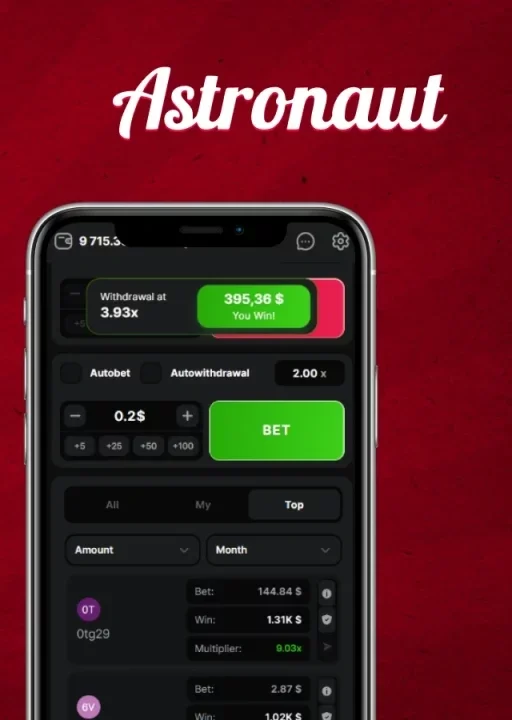
Astronaut shows recent crash multipliers and sometimes top wins.
You cannot predict the next round from this data, but you can use it to:
- Check whether your stakes creep up after losses.
- Review how often you break your own cash-out rules.
- Notice how quickly a full session consumes your budget.
Treat history as a mirror for your behavior, not as a forecast tool.
Demo vs Real Play
Why Start With Demo Mode
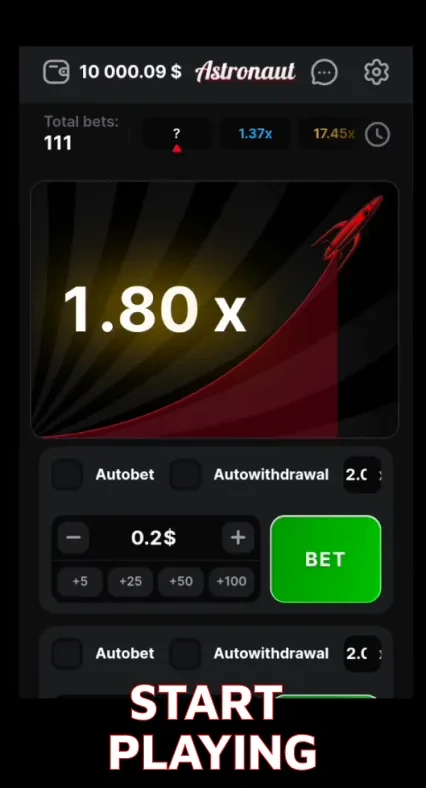
The demo version uses virtual credits and replicates the real game mechanics:
Good reasons to start there:
- Learn the interface and timing.
- Test cash-out targets and dual-bet patterns.
- Practice using Take Half and auto cash-out.
You can also check how quickly rounds play out at different speeds without risking real funds.
Moving from Demo to Real Bets
When switching to real stakes:
- Cut your demo stake sizes by a large margin at first.
- Keep the same rules that worked in demo: targets, limits, breaks.
- Accept that real-money pressure will feel different.
If your decisions collapse as soon as real money is involved, pause and reconsider your limits.
Mistakes to Avoid in Real-Money Mode
Common errors in Astronaut and other crash games:
- Treating the game as income instead of paid entertainment.
- Chasing losses with bigger and bigger bets.
- Believing recent history “guarantees” a certain result.
- Ignoring local laws, age limits, or casino licence issues.
Astronaut can be engaging and mathematically sharp at the same time. Just remember that the house edge never disappears, and any talk of guaranteed profit is misleading. Use the tools, treat profit as a short-term outcome rather than a goal, and walk away once your limits are reached.